

Disclaimer

This article is for educational purposes only and should not be considered medical advice. Research on the relationship between GLP-1 medications and dopamine is still evolving, and individual experiences may vary. Always speak with a qualified healthcare professional before making changes to your medications, supplements, or treatment plan.
Is Your GLP-1 Medication Affecting Your Motivation?
GLP-1 medications such as Mounjaro (tirzepatide), Ozempic, and Wegovy have transformed weight loss and metabolic health. Many users report reduced hunger, better blood sugar control, and significant weight reduction.
However, an increasing number of people are sharing another side of the story: low motivation, brain fog, reduced drive, and feeling emotionally “flat.”
Is this real? And if so, what can help?
Let’s explore the relationship between GLP-1 medications, dopamine, and natural supplements that may support mental energy and motivation.
The GLP-1 and Dopamine Connection
Dopamine is often called the brain’s “motivation chemical,” although its role is much broader than simply making us feel good.
It helps regulate:
- Motivation and drive
- Reward-seeking behavior
- Focus and attention
- Learning and memory
- Goal-directed actions
Interestingly, GLP-1 receptors are found not only in the gut but also in areas of the brain involved in reward and pleasure.
Researchers believe GLP-1 medications may influence dopamine pathways, which could explain why many users experience:
- Reduced food cravings
- Less interest in alcohol
- Lower compulsive behaviors
- Decreased desire for shopping or gambling
While these effects can be beneficial, some individuals also report feeling:
- Less motivated
- Emotionally flat
- Mentally sluggish
- Less excited about hobbies and daily activities
The scientific evidence is still evolving, and not everyone experiences these symptoms. In many cases, low calorie intake, nutrient deficiencies, or rapid weight loss may also contribute to brain fog and fatigue.
Why Brain Fog Happens on GLP-1 Medications
Several factors may play a role:
1. Lower Dopamine Activity
By reducing reward-seeking behaviors, GLP-1 drugs may indirectly influence dopamine signaling in certain people.
The result can sometimes feel like:
- Lower motivation
- Reduced excitement
- Mental fatigue
- A lack of “drive”
2. Eating Too Little
Many people on GLP-1 therapies consume significantly fewer calories than before.
Low carbohydrate intake and inadequate protein can reduce energy availability for the brain, leading to:
- Brain fog
- Fatigue
- Poor concentration
- Irritability
3. Nutrient Deficiencies
Rapid weight loss may increase the risk of deficiencies in:
- Iron
- Vitamin B12
- Vitamin D
- Magnesium
- B vitamins
All of these nutrients play important roles in energy production and brain function.
Rhodiola Rosea: The Adaptogenic Energy Booster
Rhodiola Rosea is an adaptogenic herb traditionally used to combat fatigue and improve mental performance.
How Does Rhodiola Work?
Scientists believe Rhodiola may:
- Support dopamine activity
- Help preserve serotonin levels
- Reduce physical and mental fatigue
- Improve resilience to stress
- Enhance cognitive performance under pressure
Unlike strong stimulants, Rhodiola tends to provide smoother energy without causing a major crash.
Many people describe its effects as:
- Clearer thinking
- Better mood
- Increased mental stamina
- Improved motivation
Typical Dosage
Most studies use:
200–600 mg per day
Ideally, take it in the morning because it can be mildly stimulating.
People who are sensitive to stimulants should start with lower doses.
L-Tyrosine: The Building Block of Dopamine
L-Tyrosine is an amino acid that serves as a precursor for important brain chemicals, including:
- Dopamine
- Norepinephrine
- Epinephrine
Your body uses tyrosine to manufacture these neurotransmitters, especially during periods of stress, sleep deprivation, or intense mental work.
How L-Tyrosine Helps
Supplementing with L-Tyrosine may support:
- Mental focus
- Motivation
- Cognitive performance under stress
- Alertness
- Working memory
It does not directly increase dopamine like a drug, but it provides the raw materials your brain needs to produce it.
Typical Dosage
Common doses include:
500–2,000 mg per day
Many people take it:
- In the morning
- On an empty stomach
- Before mentally demanding tasks
- Before workouts
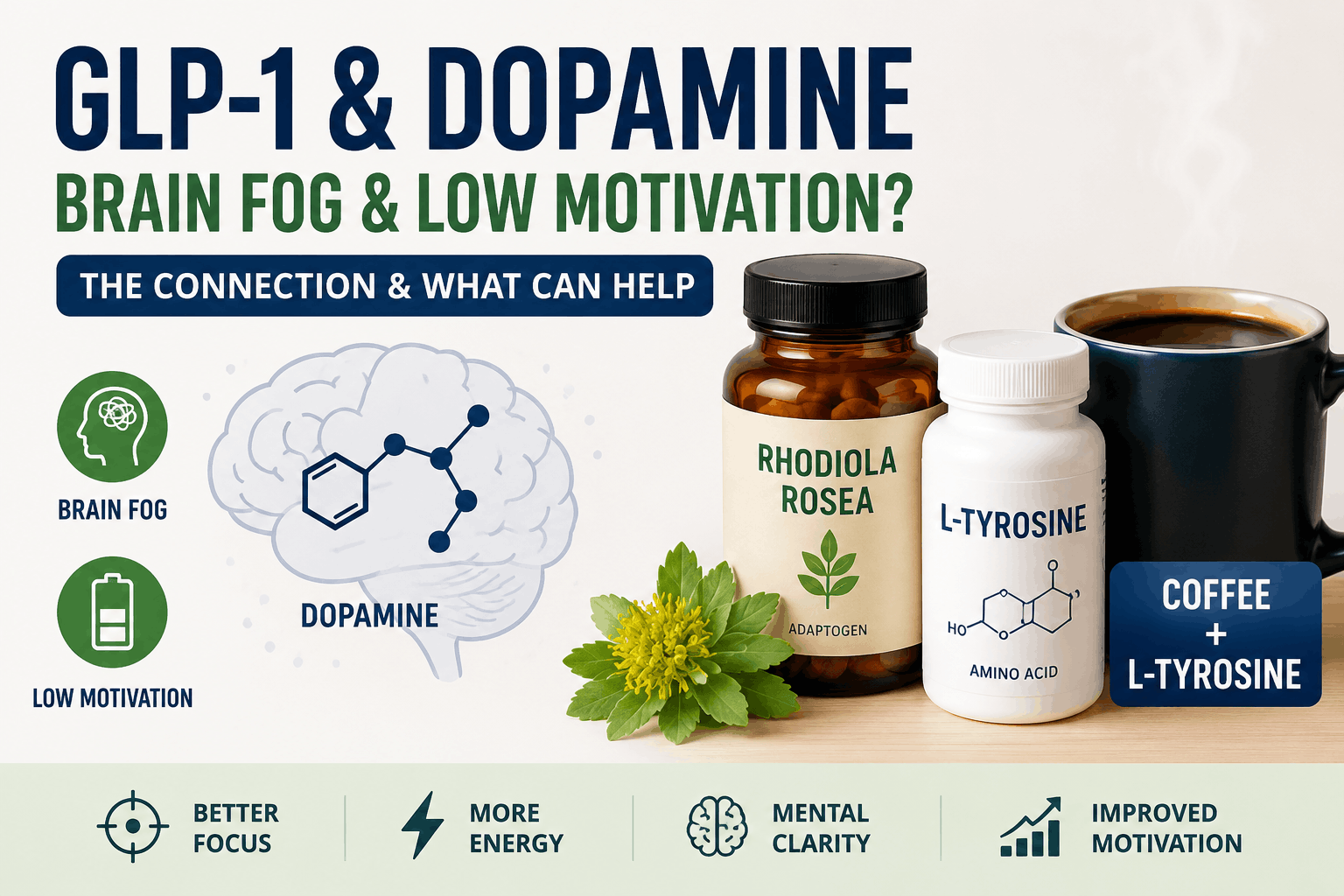
Coffee and L-Tyrosine: A Popular Combination
One of the most popular stacks for combating GLP-1 brain fog is:
☕ Coffee + L-Tyrosine
Why?
Caffeine works by:
- Blocking adenosine receptors
- Increasing alertness
- Improving focus
- Enhancing energy levels
Meanwhile, L-Tyrosine provides the building blocks needed for dopamine production.
The combination may create:
- Better mental clarity
- Increased motivation
- Improved concentration
- Smoother energy compared with caffeine alone
A common approach is:
- 1 cup of coffee
- 500–1,000 mg L-Tyrosine
- Morning use only
People who are sensitive to caffeine should use lower amounts.
A Simple Supplement Stack for GLP-1 Brain Fog
Many GLP-1 users experiment with the following supportive stack:
Morning
- Rhodiola Rosea (200–500 mg)
- L-Tyrosine (500–1,000 mg)
- Coffee or tea
- High-protein breakfast
Daily Foundations
- Magnesium glycinate
- Omega-3 fish oil
- Vitamin D (if deficient)
- Vitamin B12 (if levels are low)
- Adequate hydration and electrolytes
These supplements are not magic solutions, but they may help support mental energy while your body adapts to weight loss.
The Bigger Picture
If you’re experiencing brain fog or low motivation on a GLP-1 medication, dopamine changes may be only one piece of the puzzle.
Other important factors include:
- Eating enough calories
- Consuming sufficient protein
- Maintaining healthy iron levels
- Getting adequate sleep
- Managing stress
- Correcting vitamin deficiencies
For many people, these issues improve as the body adapts to treatment and nutrition is optimized.
Final Thoughts
GLP-1 medications are changing the way we approach obesity and metabolic health, but they may also influence the brain’s reward systems in ways we are only beginning to understand.
If you feel less motivated or mentally sluggish, natural supplements such as Rhodiola Rosea and L-Tyrosine, combined with proper nutrition and good sleep, may provide helpful support.
Always consult your healthcare provider before adding supplements, especially if you take medications or have underlying medical conditions.
Sources and further reading
Editorial note: this article is educational and should not replace guidance from a qualified healthcare professional. Source links are provided to help readers verify key claims and safety context.
- FDA — GLP-1 receptor agonist safety communication and review of psychiatric adverse-event data
- Scientific Reports, 2024 — Risk of depression, anxiety, and suicidal behavior in patients with obesity on GLP-1 receptor agonist therapy
- NEJM — Tirzepatide once weekly for the treatment of obesity, SURMOUNT-1
- NEJM — Tirzepatide for obesity treatment and diabetes prevention

