

Oil is one of the most important resources in the global economy. It fuels cars, planes, industries, and even powers parts of electricity production. But oil prices don’t just change randomly — a major influence behind them is a group called Organization of the Petroleum Exporting Countries (OPEC).
This guide explains, in simple terms, what OPEC is, how it works, and why it matters to countries, businesses, and everyday people.
What is OPEC?
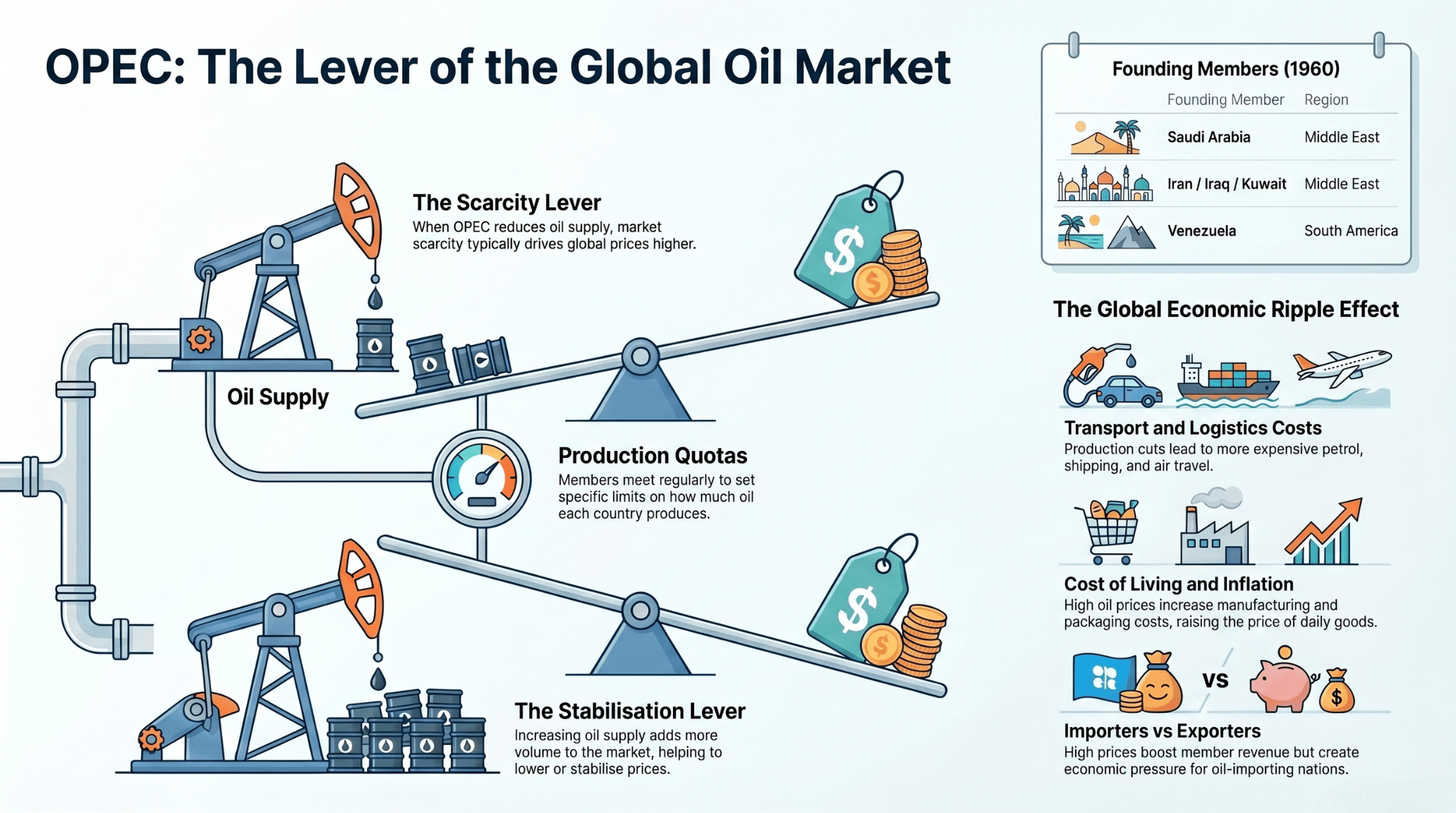
OPEC stands for the Organization of the Petroleum Exporting Countries. It is a group of oil-producing nations that work together to manage the global oil supply.
OPEC was created in 1960 to give oil-producing countries more control over their natural resources and pricing.
Main Purpose of OPEC:
- Control oil production levels
- Stabilize oil prices
- Protect member countries’ income
Today, OPEC includes major oil exporters from the Middle East, Africa, and South America.
Why was OPEC created?
Before OPEC, large oil companies (mostly Western) had strong control over oil production and pricing. Oil-producing countries wanted more control over their own resources and income. So, they formed OPEC to:
- Protect their oil revenues
- Control production levels
- Influence global oil prices
How OPEC Controls Oil Prices
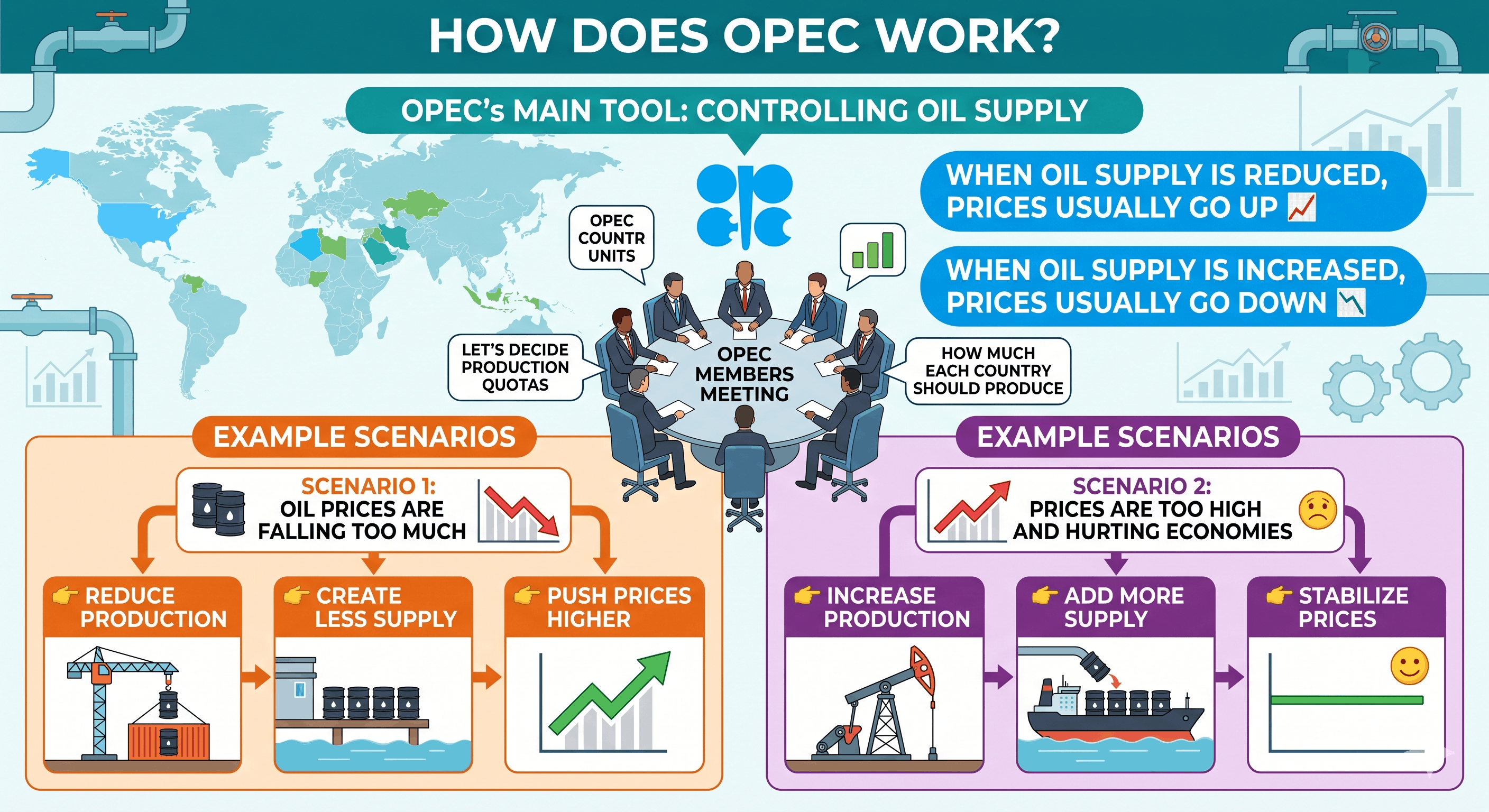
OPEC’s main tool is controlling oil supply.
Here’s how it works in simple terms:
- When oil supply is reduced, prices usually go up
- When oil supply is increased, prices usually go down
OPEC members meet regularly and decide how much oil each country should produce. These decisions are called production quotas.
Example:
If oil prices are falling too much, OPEC may:
👉 Reduce production
👉 Create less supply
👉 Push prices higher
If prices are too high and hurting economies:
👉 Increase production
👉 Add more supply
👉 Stabilize prices
What is OPEC+?
In recent years, OPEC has worked with other oil-producing countries like Russia. This expanded group is called OPEC+.
OPEC+ has more influence because it includes even more of the world’s oil supply.
How OPEC Impacts the World
OPEC decisions don’t just affect oil companies — they impact the entire global economy.
1. Fuel Prices
When OPEC cuts production:
- Petrol (gasoline) prices go up
- Transportation costs increase
- Flights and shipping become more expensive
When production increases:
- Fuel becomes cheaper
- Travel and logistics costs drop
2. Inflation and Cost of Living
Oil is used in many industries:
- Transportation
- Manufacturing
- Plastics and packaging
So when oil prices rise:
- Goods become more expensive
- Inflation increases
- Daily living costs go up
3. Global Economy
High oil prices can slow down economic growth, especially in countries that import oil.
Low oil prices can boost economies but may hurt oil-producing countries.
Advantages of OPEC (For Member Countries)
OPEC gives strong benefits to oil-producing nations:
Stable Income
By controlling supply, countries can avoid sudden price crashes and maintain steady revenue.
Strong Global Influence
OPEC countries can influence global markets and even political decisions.
Resource Control
Members keep control over their natural oil reserves instead of relying on foreign companies.
Disadvantages of OPEC
OPEC is not beneficial for everyone.
For Oil-Importing Countries
Countries that depend on oil imports (like many in Europe and Asia) may face:
- Higher fuel prices
- Increased inflation
- Economic pressure
For Smaller Economies
Some countries suffer when oil prices rise because:
- Transport and production costs increase
- Businesses struggle
- Consumers spend more
Internal Challenges in OPEC
Even within OPEC:
- Some countries may not follow production rules strictly
- Political differences can affect decisions
- Economic needs vary between members
Real-World Example
Imagine oil prices suddenly drop.
OPEC may decide:
👉 “Let’s reduce oil production”
This leads to:
- Less oil in the market
- Prices rising again
Now imagine prices rise too much:
👉 OPEC increases production
👉 Prices stabilize
This balancing act is how OPEC tries to control the market.
Why OPEC Still Matters Today
Even with renewable energy growing, oil is still a key global resource. OPEC continues to play a major role because:
- It controls a large portion of the world’s oil supply
- Its decisions impact global prices
- It affects economies, governments, and businesses worldwide
Final Thoughts
OPEC is not just an oil group — it’s a powerful force in the global economy.
- For oil-producing countries, it brings stability and influence
- For oil-importing countries, it can create cost challenges
- For consumers, it directly affects fuel prices and living costs
Understanding OPEC helps you better understand why petrol prices change and how global economics works behind the scenes.

