

Disclaimer

This article is for educational purposes only and should not be considered medical advice. Research on the relationship between GLP-1 medications and dopamine is still evolving, and individual experiences may vary. Always speak with a qualified healthcare professional before making changes to your medications, supplements, or treatment plan.
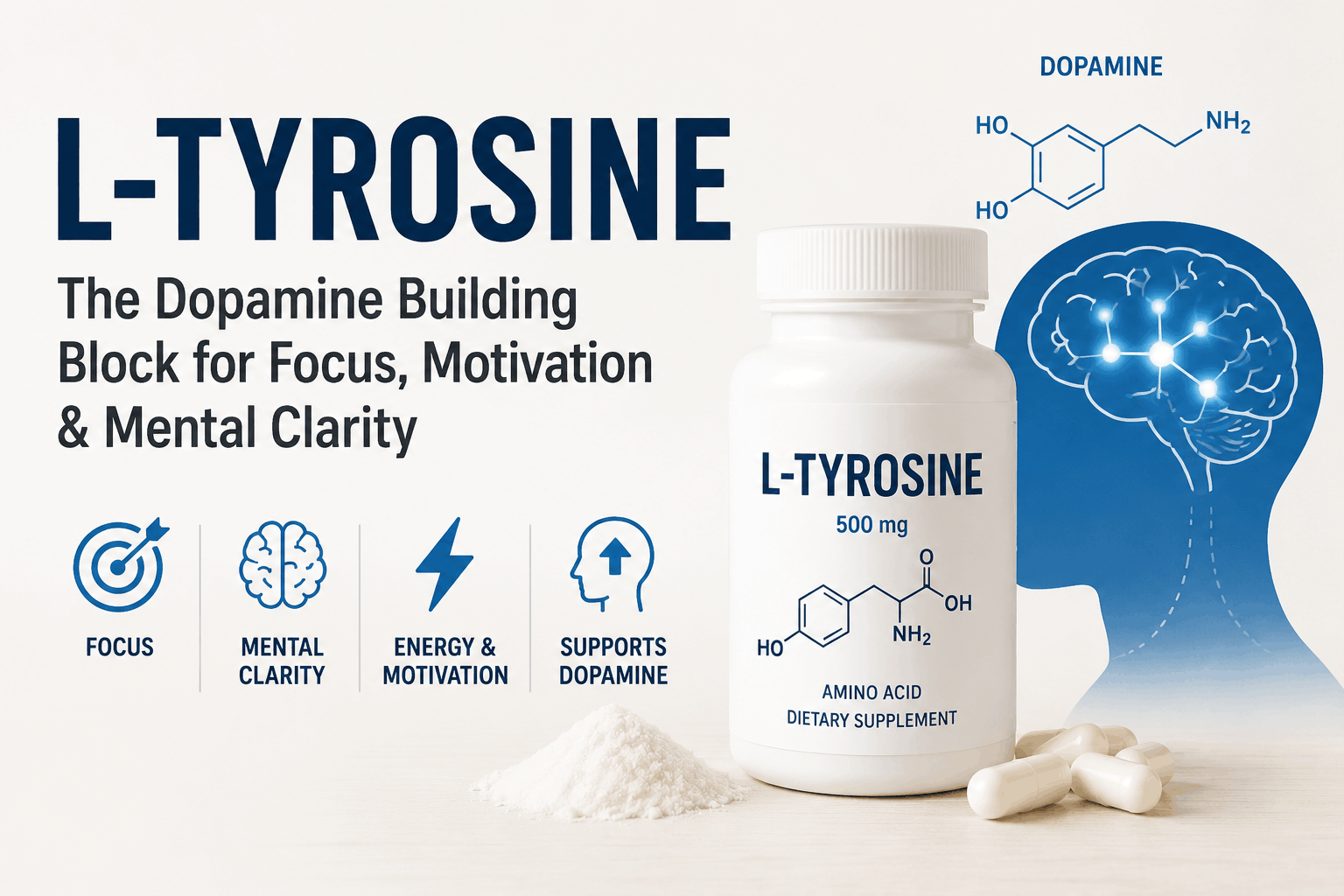
L-Tyrosine is a non-essential amino acid, meaning your body can make it from another amino acid called phenylalanine. It is also found naturally in foods such as:
- Eggs
- Chicken
- Fish
- Dairy products
- Soy products
- Nuts and seeds
The reason L-Tyrosine has become popular as a supplement is because it serves as a building block for important brain chemicals, including:
- Dopamine (motivation and reward)
- Norepinephrine (focus and alertness)
- Epinephrine (adrenaline and stress response)
How Does L-Tyrosine Work?
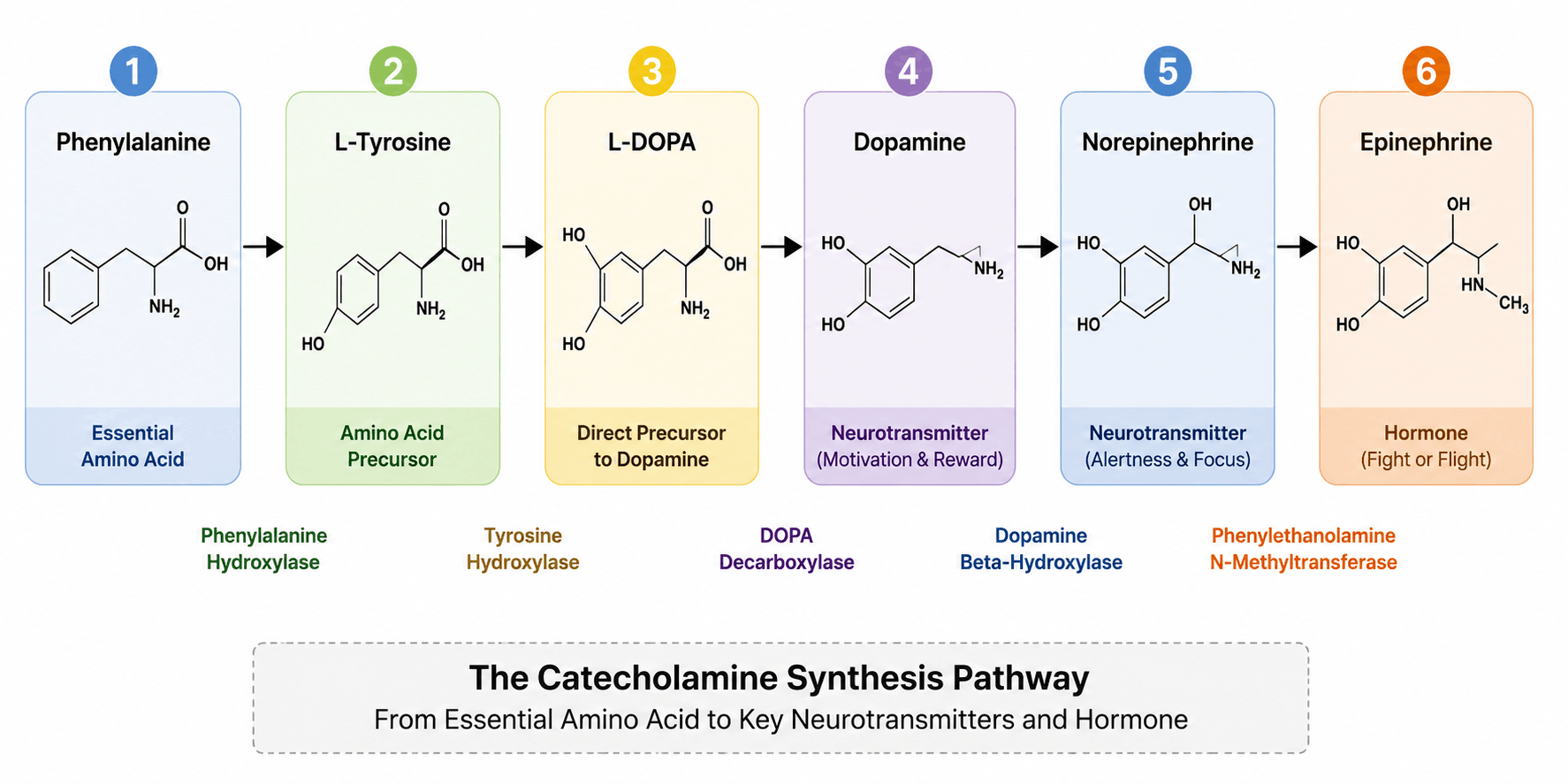
The pathway looks like this:
Phenylalanine → L-Tyrosine → L-DOPA → Dopamine → Norepinephrine → Epinephrine
Think of L-Tyrosine as the raw material your brain uses to make dopamine.
However, this is important:
L-Tyrosine does NOT force your brain to produce unlimited dopamine.
Instead, it helps provide the ingredients needed when dopamine and norepinephrine become temporarily depleted, especially during stressful situations.
What Does Research Actually Show?
1. Better Mental Performance Under Stress
The strongest evidence for L-Tyrosine comes from studies involving:
- Sleep deprivation
- Military training
- Extreme cold
- High mental workload
- Intense stress
A 2015 systematic review concluded that L-Tyrosine can improve cognitive performance when people are under short-term stress or mentally demanding conditions, although benefits in normal everyday situations are less clear.
2. Improved Working Memory and Focus
Several studies suggest L-Tyrosine may help:
- Working memory
- Task switching
- Mental flexibility
- Reaction time
- Information processing speed
The effects appear strongest when the brain is working hard or when catecholamines (dopamine and norepinephrine) are being heavily used.
3. It Is Not a Magic Dopamine Booster
Many social media influencers call L-Tyrosine “natural Adderall” or a dopamine hack.
The science does not support those claims.
Experts generally agree that:
- Benefits are usually mild to moderate
- Effects are mostly short-term
- Healthy people may notice little difference during normal daily activities
- It is not an established treatment for ADHD, depression, or low motivation disorders
Why People on GLP-1 Medications Use It
Many GLP-1 users report:
- Reduced food reward
- Lower motivation
- Brain fog
- Emotional flatness
- Less interest in activities they previously enjoyed
Although researchers are still studying whether GLP-1 drugs directly affect dopamine pathways, some users find that L-Tyrosine helps support:
- Mental clarity
- Morning energy
- Workout motivation
- Focus during work
The evidence for this specific use is mostly anecdotal rather than proven in clinical trials.
L-Tyrosine vs N-Acetyl L-Tyrosine (NALT)
People often ask which form is better.
L-Tyrosine
✅ Better studied
✅ Higher evidence base
✅ Usually recommended by researchers
NALT (N-Acetyl L-Tyrosine)
✅ More water soluble
❌ May convert less efficiently into actual tyrosine in the body
❌ Much less research support
Most experts prefer regular L-Tyrosine over NALT for cognitive and dopamine support.
Best Ways to Take L-Tyrosine
Many people use:
500–1,000 mg in the morning
Common stacks include:
Coffee + L-Tyrosine
- Increased alertness from caffeine
- Dopamine precursor support from Tyrosine
- Better focus and motivation
Rhodiola + L-Tyrosine
- Rhodiola reduces mental fatigue
- Tyrosine provides neurotransmitter building blocks
- Popular among people experiencing stress or burnout
Possible Side Effects
L-Tyrosine is generally considered safe, but some people experience:
- Headaches
- Nausea
- Heart palpitations
- Anxiety
- Insomnia (if taken late)
People with these conditions should consult a doctor first:
- Hyperthyroidism
- Graves’ disease
- Migraines
- MAOI medication use
The Bottom Line
L-Tyrosine is not a miracle supplement, but it is one of the better-researched amino acids for supporting cognitive performance during periods of stress, fatigue, and high mental demand. The strongest evidence suggests it helps maintain working memory, focus, and information processing when dopamine and norepinephrine stores are being challenged.
For people experiencing mild brain fog or reduced motivation—whether from dieting, stress, poor sleep, or potentially while using GLP-1 medications—it may be a useful tool alongside proper nutrition, sleep, exercise, and adequate protein intake. The key is to view it as support for your brain’s natural chemistry, not as a replacement for medical treatment or a guaranteed dopamine booster.
Sources and further reading
Editorial note: this article is educational and should not replace guidance from a qualified healthcare professional. Source links are provided to help readers verify key claims and safety context.
- Jongkees et al., 2015 — Effect of tyrosine supplementation on clinical and healthy populations under stress or cognitive demands (PubMed)
- Deijen & Orlebeke, 1994 — Effect of tyrosine on cognitive function and blood pressure under stress (PubMed)
- WebMD — Phenylalanine: uses, side effects, precautions and interactions
- Mayo Clinic — Phenylalanine, PKU, and precautions

