

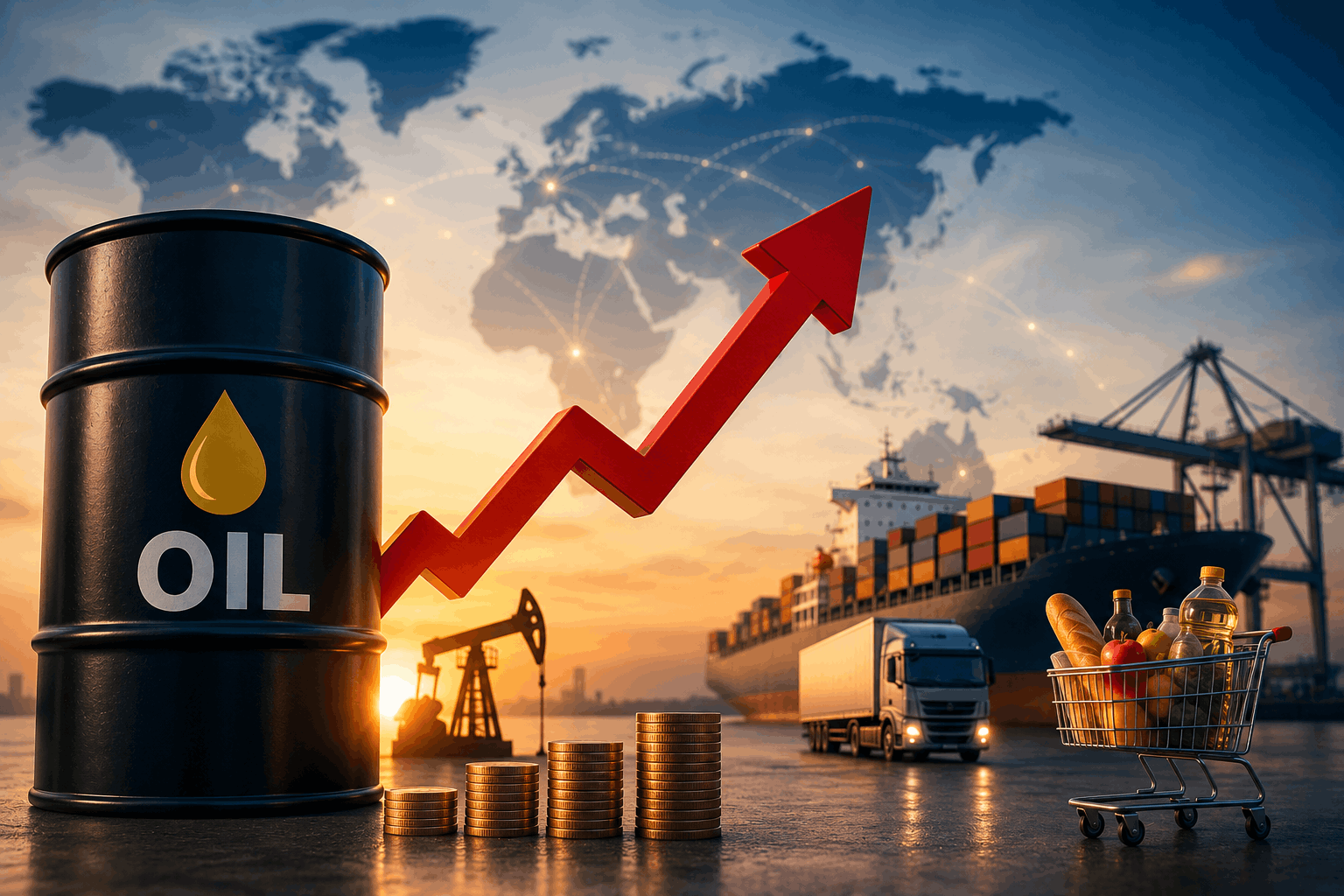
Almost everything in the modern world depends on oil.
The food you eat, the clothes you wear, the package delivered to your home, flights, shipping, factories, electricity in some countries — all of it is connected to energy. And oil is still one of the world’s biggest energy sources.
This is why whenever oil prices suddenly rise, people across the world start hearing one word everywhere:
Inflation.
But how exactly are oil prices connected to inflation?
Why does expensive oil make daily life more costly?
Let’s break it down in a simple and human way.
First: What Is Inflation?
Inflation simply means:
Prices of goods and services keep increasing over time.
For example:
- Petrol becomes more expensive
- Food prices rise
- Airline tickets cost more
- Electricity bills increase
- Transport becomes expensive
- Companies raise product prices
When this happens across the economy, inflation rises.
Why Oil Is So Important to the Global Economy
Oil is not only used for cars.
Crude oil is connected to:
- Transportation
- Manufacturing
- Shipping
- Aviation
- Farming
- Plastic production
- Chemicals
- Electricity generation in some countries
That means oil is part of almost every supply chain in the world.
When oil prices increase, the cost of moving and producing things also rises.
And businesses usually pass those extra costs to consumers.
That is how inflation starts spreading.
The Simple Chain Reaction
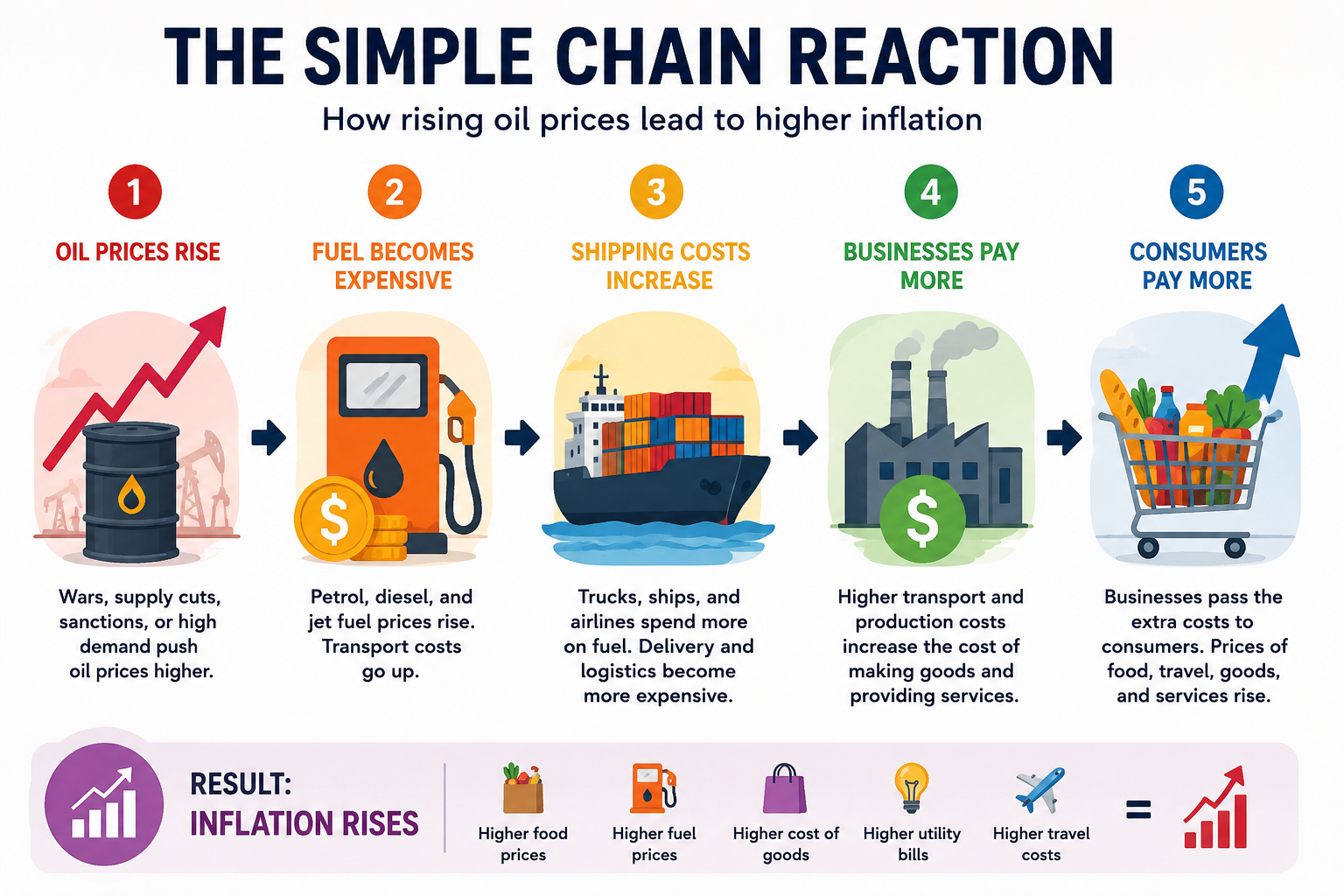
Here’s how it usually works:
Step 1 — Oil Prices Rise
This can happen because of:
- Wars
- Supply cuts
- OPEC decisions
- Sanctions
- Shipping disruptions
- Rising global demand
For example:
- Russia-Ukraine war
- Tensions in the Middle East
- Strait of Hormuz concerns
All of these can push oil prices higher.
Step 2 — Fuel Becomes Expensive
When crude oil rises:
- Petrol prices rise
- Diesel prices rise
- Jet fuel becomes expensive
Transport companies now spend more money.
Step 3 — Shipping Costs Increase
Almost everything travels somewhere before reaching you.
Food, electronics, clothes, medicine — all require transportation.
If trucks, ships, and airplanes spend more on fuel:
- Delivery becomes expensive
- Import costs rise
- Businesses increase product prices
Step 4 — Consumers Pay More
This is where inflation becomes visible.
People start noticing:
- Grocery prices increase
- Taxi fares rise
- Online deliveries cost more
- Electricity bills go up
- Restaurant prices rise
Even products that have nothing to do with oil directly become more expensive because transportation and production costs increased.
Why Food Prices Also Rise
Many people don’t realize oil affects agriculture too.
Modern farming depends heavily on:
- Diesel tractors
- Fertilizers
- Transportation
- Cold storage systems
Even fertilizers are connected to energy markets.
So when oil prices rise:
- Farming becomes expensive
- Food transportation costs rise
- Supermarket prices increase
This is why oil shocks often create food inflation globally.
Why Developing Countries Suffer More
Countries that import large amounts of oil are usually hit hardest.
If a country depends on imported fuel:
- Its currency may weaken
- Import bills increase
- Inflation rises faster
Poorer countries often suffer more because:
- Fuel is a large part of household spending
- Food inflation hits lower-income families hardest
This is why rising oil prices can sometimes trigger economic stress and even protests in some regions.
Why Central Banks Fear Oil Spikes
Central banks like:
- The U.S. Federal Reserve
- European Central Bank
- Bank of England
all closely monitor oil prices.
Why?
Because high oil prices can create long-lasting inflation.
When inflation rises too much, central banks often:
- Increase interest rates
- Make loans more expensive
- Slow down spending
This is done to cool inflation.
But higher interest rates can also slow economic growth.
So oil prices can indirectly affect:
- Mortgages
- Business loans
- Stock markets
- Job markets
Why Oil Wars Matter to the World
Whenever there is conflict in major oil-producing regions, markets become nervous.
Especially around:
- The Middle East
- Strait of Hormuz
- Russia
- OPEC countries
Investors fear:
- Supply disruptions
- Shipping blockages
- Reduced exports
Even the fear of supply shortages can push oil prices higher.
This is why global markets react strongly to tensions involving:
- Iran
- Saudi Arabia
- Russia
- Israel
- U.S. military activity in the Gulf
The world economy is deeply connected to stable energy supply.
Why the Strait of Hormuz Is So Important
One of the biggest reasons oil prices move during Middle East tensions is the Strait of Hormuz.
A huge percentage of global oil shipments pass through this narrow water route.
If shipping is disrupted there:
- Oil supply fears rise
- Prices can jump rapidly
- Global inflation concerns increase
That’s why the entire world watches this region closely.
Can High Oil Prices Cause Recession?
Yes — sometimes.
If oil prices stay very high for too long:
- Consumers spend less
- Businesses face higher costs
- Inflation rises
- Interest rates increase
Eventually:
- Economic growth slows
- Hiring weakens
- Markets become unstable
This can lead to recession risks.
Historically, several major recessions were linked to oil shocks.
Why Oil Still Controls So Much of the World
Many countries are investing in:
- Electric vehicles
- Renewable energy
- Solar power
- Wind energy
But the world still heavily depends on oil.
Even today:
- Ships use fuel
- Airplanes need jet fuel
- Factories require energy
- Global logistics depend on diesel
That means oil prices still influence the global economy more than most people realize.
Final Thoughts
Oil is much more than fuel for cars.
It is one of the foundations of the global economy.
When oil prices rise:
- Transportation becomes expensive
- Food prices increase
- Manufacturing costs rise
- Inflation spreads across countries
That’s why governments, investors, banks, and businesses all watch oil markets closely.
A single oil price spike in one region can eventually affect grocery bills, travel costs, and household expenses on the other side of the world.
In simple words:
When oil becomes expensive, life often becomes more expensive too.

