

The information provided in this article is for educational purposes only and is not intended as medical advice, diagnosis, or treatment. Peptides are not approved for all uses and may be regulated differently depending on your country. Always consult a licensed healthcare provider before using any peptide or performance-enhancing substance. The author does not promote or encourage unsupervised use.
In recent years, peptides have gained significant attention in the health, fitness, and anti-aging industries. Many people are now exploring peptides as an alternative to traditional supplements, hormones, or performance-enhancing drugs. But what makes peptides stand out? And why are they often considered a safer option?
Let’s break it down in simple terms.
What Are Peptides?
Peptides are short chains of amino acids — the same building blocks that make up proteins in your body. Since they are naturally occurring, your body already recognizes and uses them for essential functions like:
- Hormone production
- Tissue repair
- Fat metabolism
- Muscle growth
- Immune support
Because of this, peptides work with your body rather than forcing unnatural changes.
1. Closer to Natural Body Processes
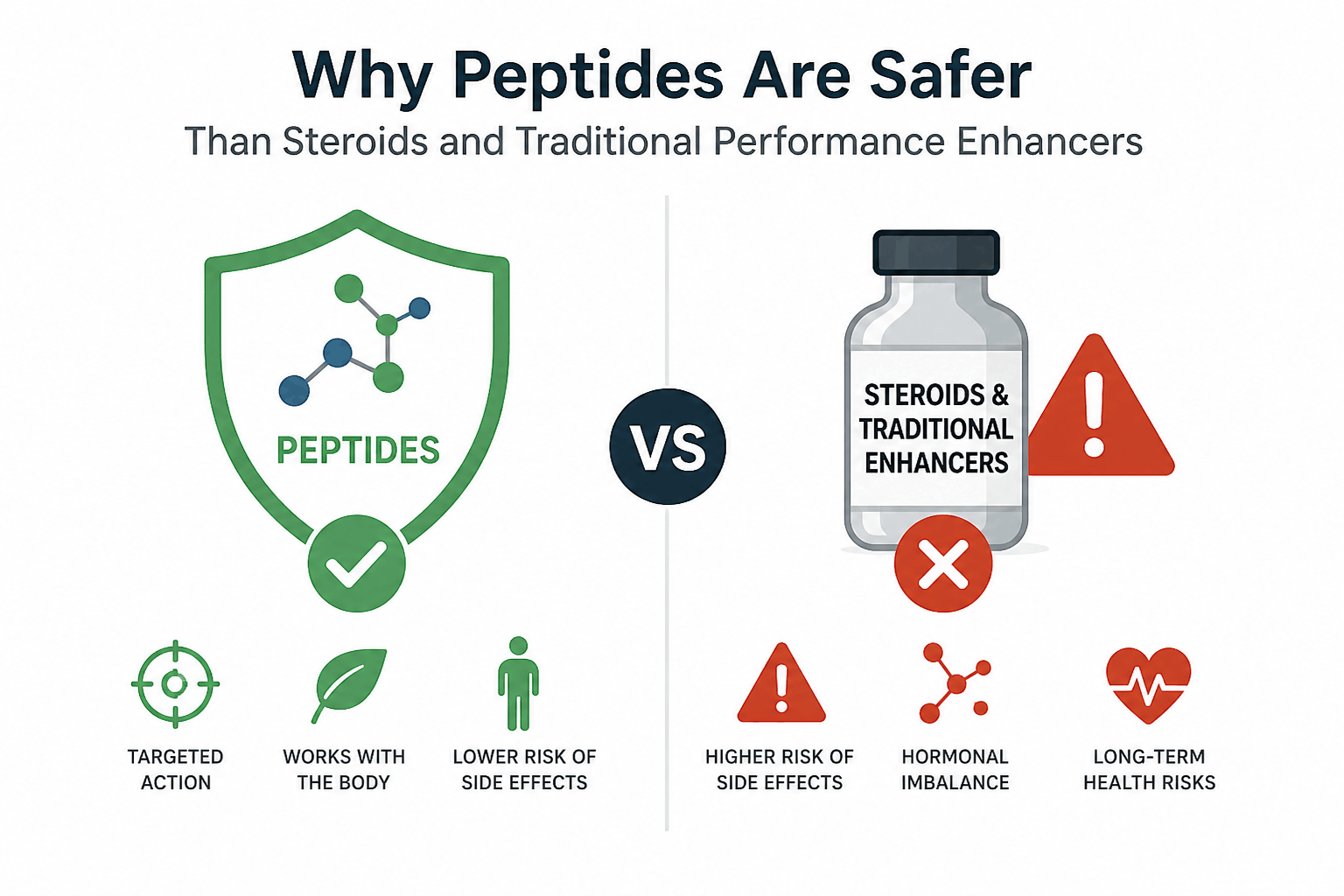
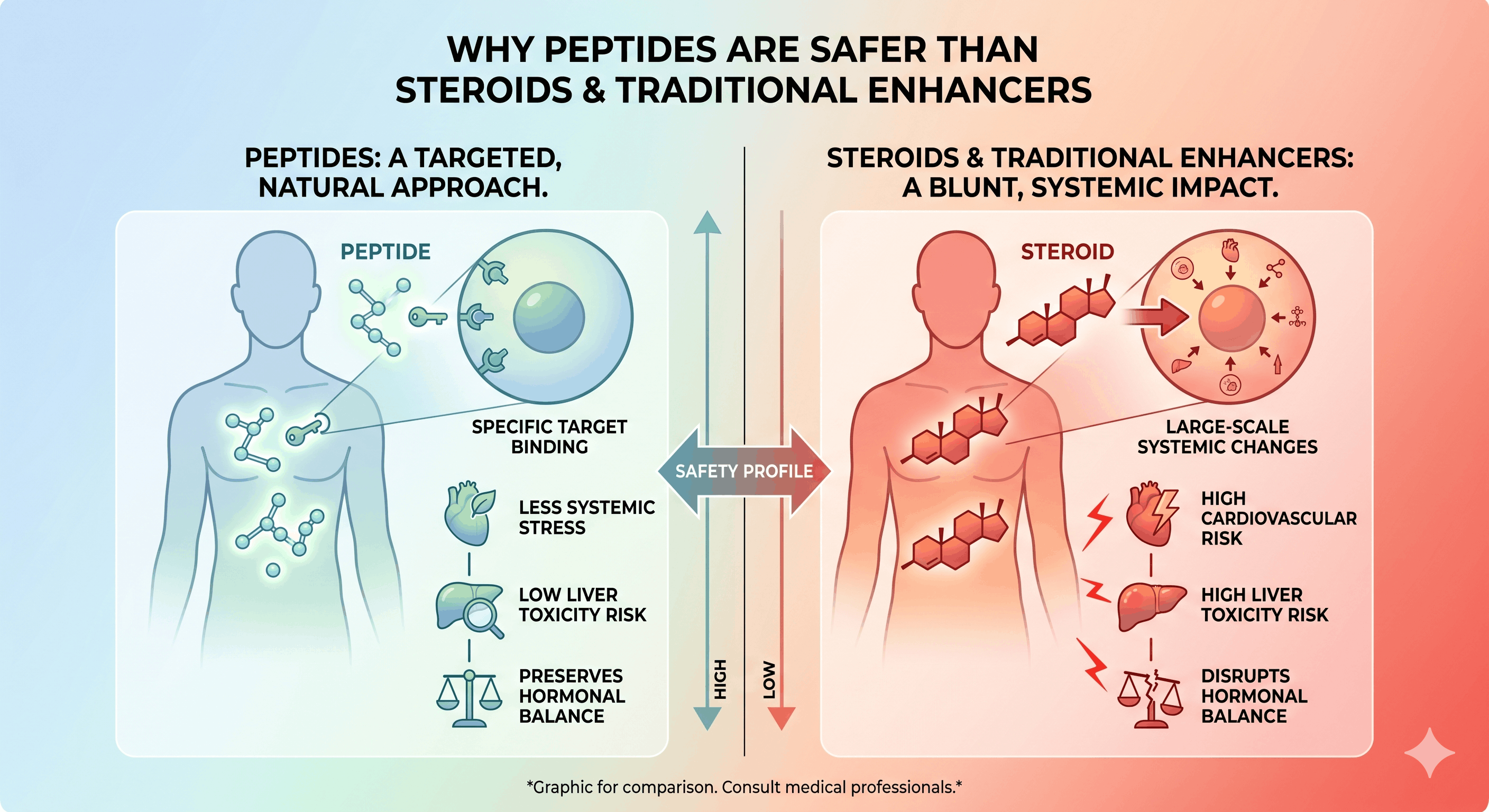
Unlike synthetic drugs or anabolic steroids, peptides mimic signals your body already uses.
For example:
- Some peptides signal your body to release growth hormone
- Others help regulate inflammation or healing
This means they don’t override your system — they guide it.
Result: Lower risk of shocking your body or causing extreme imbalances.
2. Targeted Action (Less System-Wide Impact)
One of the biggest advantages of peptides is their precision.
Traditional drugs often affect multiple systems at once, leading to unwanted side effects. Peptides, on the other hand, are designed to target specific receptors or functions.
Examples:
- Fat loss peptides target metabolism
- Healing peptides target tissue repair
- Sleep peptides affect relaxation and recovery
👉 Result: Fewer side effects compared to broad-acting medications.
3. Lower Risk of Hormonal Damage
Substances like anabolic steroids can shut down your natural hormone production, leading to long-term problems such as:
- Testosterone suppression
- Mood swings
- Fertility issues
Peptides (especially growth hormone–releasing ones) typically stimulate your natural production instead of replacing it.
Result: Reduced risk of permanent hormonal disruption.
4. Shorter Half-Life = More Control
Peptides usually have a short half-life, meaning they don’t stay in your system for too long.
Why this matters:
- If something doesn’t suit you, it clears faster
- Easier to adjust dosage
- Lower risk of long-term buildup or toxicity
Result: Better control and safety compared to long-acting drugs.
5. Fewer Severe Side Effects (When Used Properly)
When sourced correctly and used responsibly, peptides tend to have milder side effects such as:
- Slight water retention
- Temporary fatigue
- Mild irritation at injection site
Compare that to stronger alternatives like steroids or harsh fat burners, which can cause:
- Liver damage
- Cardiovascular stress
- Dependency issues
Result: Safer profile when used under proper guidance.
6. Supports Healing, Not Just Performance
Many performance enhancers focus only on results (muscle, fat loss, etc.), often ignoring long-term health.
Peptides often do both:
- Improve recovery
- Support joints and tissues
- Reduce inflammation
Result: Better long-term sustainability.
Important Reality Check ⚠️
Even though peptides are safer, they are not risk-free.
You still need to consider:
- Proper dosing
- Source quality (very important)
- Medical supervision
- Individual health conditions
Also, not all peptides are approved everywhere, and misuse can still lead to problems.
Final Thoughts
Peptides are considered a safer option because they:
- Work with natural body systems
- Offer targeted effects
- Reduce hormonal damage risks
- Provide better control due to short lifespan
- Support both performance and recovery
However, safety always depends on how they are used. The smartest approach is informed, controlled, and responsible use — not blind experimentation.
Sources and further reading
Editorial note: this article is educational and should not replace guidance from a qualified healthcare professional. Source links are provided to help readers verify key claims and safety context.

