

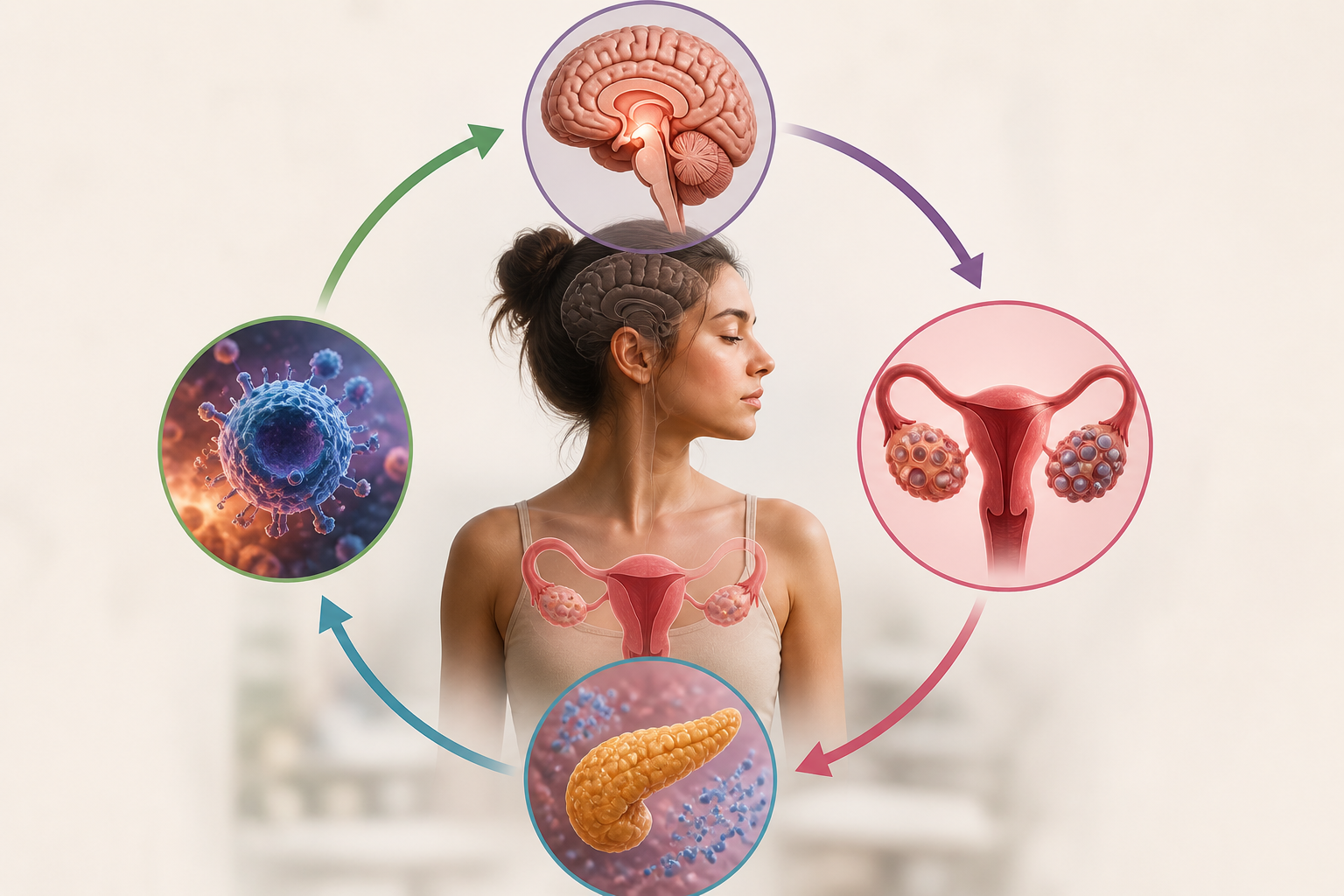
1) The core loop: brain → ovaries → hormones
Your reproductive system is coordinated by the hypothalamus–pituitary–ovarian (HPO) axis:
- The brain releases pulses that tell the pituitary to send LH (luteinizing hormone) and FSH (follicle-stimulating hormone).
- In many people with Polycystic Ovary Syndrome, those pulses are faster, so LH stays relatively high vs FSH.
- High LH pushes ovarian “theca” cells to make more androgens (testosterone-like hormones).
Result: follicles start to grow but don’t fully mature → ovulation doesn’t occur regularly → cycles become irregular.
2) Androgens: the visible symptoms
Excess androgens explain many hallmark features:
- Acne, oily skin
- Hair thinning on the scalp
- Increased facial/body hair
They also disrupt follicle development, reinforcing the “no ovulation” cycle.
3) Insulin resistance: a powerful amplifier (but not the only cause)
A large portion of people with PCOS have insulin resistance:
- Cells don’t respond well to insulin → the body produces more insulin to compensate.
- High insulin directly stimulates the ovaries to produce more androgens.
- It also lowers SHBG (sex hormone–binding globulin), leaving more free (active) testosterone in circulation.
👉 This creates a feedback loop:
Insulin ↑ → Androgens ↑ → Ovulation ↓ → Hormonal imbalance worsens
4) Why follicles “pile up” (the classic ultrasound look)
Because ovulation is disrupted:
- Multiple small follicles start but don’t finish developing
- They line up around the ovary (“string of pearls”)
- These are not dangerous cysts, but immature follicles
5) Inflammation & adrenal contribution
PCOS isn’t only ovarian:
- Low-grade chronic inflammation is common and worsens insulin signaling
- The adrenal glands can also produce excess androgens (stress plays a role here)
Why PCOS is NOT just about weight
This is one of the biggest misconceptions.
1) Lean PCOS exists
Many women with PCOS are normal weight or lean but still have:
- High androgens
- Irregular cycles
- Insulin resistance (sometimes “hidden”)
So weight is not the root cause.
2) Hormones can drive weight gain (not the other way around)
- High insulin → easier fat storage, harder fat loss
- Androgens → change fat distribution and metabolism
In many cases:
PCOS → weight gain, not just weight → PCOS
3) Brain signaling issues happen independent of weight
The altered LH/FSH pattern (from the brain) can occur:
- Even in lean individuals
- Even without significant insulin resistance
4) Genetics + environment
PCOS has a strong genetic component:
- Family history increases risk
- Diet, stress, sleep, and activity modify how severe it becomes
Putting it all together (simple model)
PCOS is a multi-system loop, not a single problem:
- Brain signaling imbalance (LH/FSH)
- Ovarian androgen overproduction
- Insulin resistance (in many, not all)
- Inflammation & stress hormones
These all feed into each other
Key takeaway
PCOS is:
- A hormonal + metabolic + neurological condition
- Not just a weight issue
- Not just an ovarian issue
That’s why treatment must be multi-directional:
- Metabolism (insulin)
- Hormones (androgens, cycles)
- Lifestyle (sleep, stress, nutrition)
Sources and further reading
Editorial note: this article is educational and should not replace guidance from a qualified healthcare professional. Source links are provided to help readers verify key claims and safety context.

